Useful information

A guide to information that you should find useful when planning your hunting safari in Africa. If a question you have is not answered in one of these categories, please send us a mail for further explanation.

How do we hunt?

We start the morning either with a breakfast and afterwards we head out  into the hunting area. Mostly we take along water and some fruit. 

Out in the bushveld we are going to roam until we spot the desired game, continuing stalking it by foot. Until we reached a clear view on the animal within the shooting distance of max. 180 meters.

For lunch in the hoter hrs of the day we mostly return to the farmhouse  for an hour or two to eat and drink something and there is time for you to relax a bit. With new energy and a tea or coffee we are out again for the next challenge of the day.
info

Taxidermy

We do only so called raw or field preperation. We do not handle the taxidermy process of your trophies ourselves. We work with trusted partners.
Here you will find information on the taxidermists as well as some details on the regulations involved.

More about taxidermy

According to international export regulations the trophies have to be cleaned and dipped by registered  local taxidermist or dip and cleaning companies. According to your decision the trophies will go to a local taxidermy or will be shipped to a taxidermy of your choice  either in Namibia or internationally. We will deliver the signed permit to the taxidermy or shipping company for export. All documentation for the exportation of your trophies will be done by the taxidermy or shipping company. 

Trophies can be shipped from Namibia either raw or mounted after being thoroughly treated by a Namibian taxidermist. The regulations and procedures for exporting varies depending on the species hunted.

Our skinning prices for:
Cape shouldermount: 20€ 
Giraffe shouldermount: 120€
Cape fullmount: 40€ 
Giraffe fullmount: 200€

Temporary import of your hunting rifle 


The temporary import of hunting firearms into Namibia is free of charge. Firearms and ammunition must be declared upon arrival, and the corresponding temporary import permit will be issued at the point of entry.
To speed up the process at the airport, we recommend completing the application form before departure and carrying it with your travel documents. The form currently provided by NAPHA is the official application issued by the Namibian Police: Application for a Temporary Firearm Import Permit.


Our Rifle and Calibre Recommendation


If you prefer not to travel with your own hunting rifle, you are welcome to hire our rifle. We provide a Sauer 200 in .300 Winchester Magnum, fitted with a two-stage trigger, a suppressor and a Leupold Vari-X III 3.5–10×50 mm riflescope.

The hire fee is €25 per hunting day, plus €5 per cartridge.

For a hunting safari at Düsternbrook, our preferred recommendation is the .300 Winchester Magnum with a 220-grain bullet. This powerful and proven calibre provides excellent penetration and additional reserves when hunting larger game or when presented with a less favourable shot angle. As the .300 Winchester Magnum is widely used in Namibia, suitable ammunition is generally readily available.

The .30-06 Springfield with a bullet weight of at least 180 grains is also a suitable and proven choice for many of our game species. For larger game, a 220-grain bullet is preferable. We recommend using a high-quality soft-point hunting bullet.

We advise that prior to departure, you fill in the Gun Permit Application form and carry it with you. 


Rifle import
medicine

Medical considerations

Here you find information in case you have medical considerations due to travelling to Namibia as well as information for preventive measures against malaria.

More medical information

Health and Medical Care

Malaria

Düsternbrook is situated in Namibia’s central highlands, outside the country’s usual malaria-risk areas. As risk areas and medical recommendations may vary depending on the season and your travel itinerary, we advise our guests to consult the latest official guidance before departure.

Up-to-date information is available on the website of the German Federal Foreign Office:

: https://www.auswaertiges-amt.de/de/aussenpolitik/laender/namibia-node/namibiasicherheit/208314

Medical Care

In the unlikely event of a medical emergency, several well-equipped private hospitals are located in Windhoek. The modern Lady Pohamba Private Hospital can be reached from Düsternbrook in approximately one hour by car and has a 24-hour emergency department.

Lady Pohamba Private Hospital or Medi-City or Roman Catholic Hospital 

We recommend that all guests obtain comprehensive international travel health insurance that also covers medically necessary repatriation or evacuation in the event of an emergency.
 

Kalender

When is the best time for a hunting experience in Namibia?

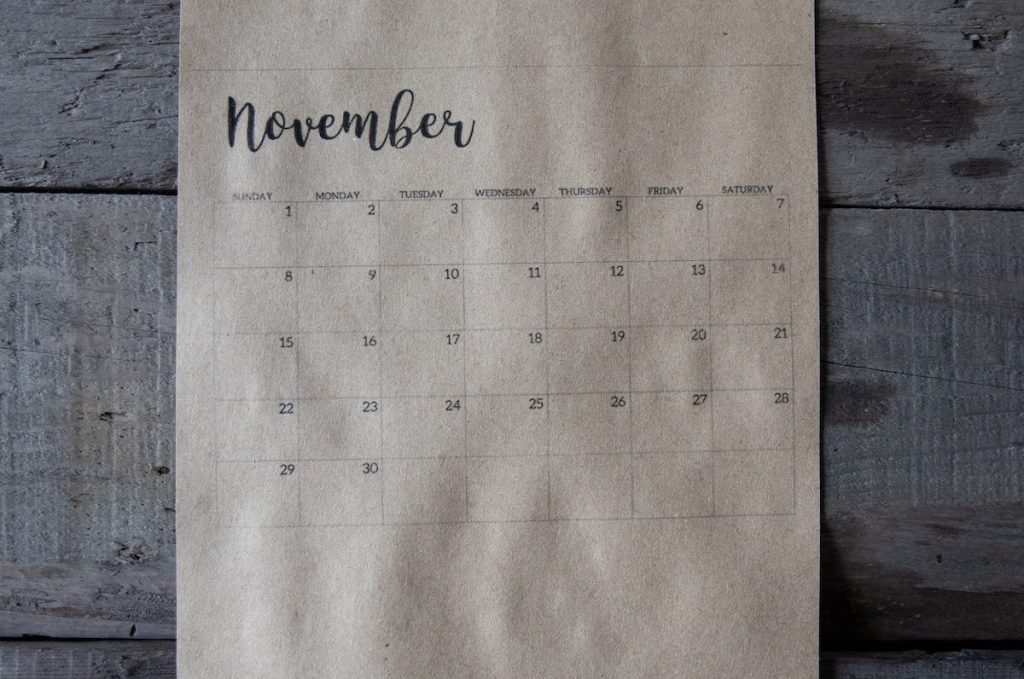
The best time to travel to Southern Africa for a hunting safari is typically during our autum, winter months and beginning of spring, which generally stretch from April to end September. These are month with cooler weather and sparser bush which makes for better hunting conditions than during the hoter summer month.
Official  hunting season in Namibia starts in beginning February to end November.
+264 81 124 1662
P.O. Box 870 - Windhoek - Namibia
Website by Artissoft
envelopephone-handsetmap-marker